
Media Buyer Communities: What They Are For, and How to Tell a Useful One From Noise (2026)
 Ethan Cole Published on August 27, 2026 · in Account Risk
 Media Buyer Communities: What They Are For, and How to Tell a Useful One From Noise (2026)
Media buying has an unusual property: the thing you most need to know is almost never documented, and by the time it is, it has changed.
Platform enforcement shifts without an announcement. A creative angle that worked for six weeks stops. An account restriction wave hits a whole vertical on a Tuesday and nobody involved can find an official explanation. Policy pages describe the rules; they do not describe how the rules are being applied this week.
That gap is why media buyer communities exist, and it is the only thing they should be evaluated against.
What buyers actually get from a community
Four things, in rough order of value:
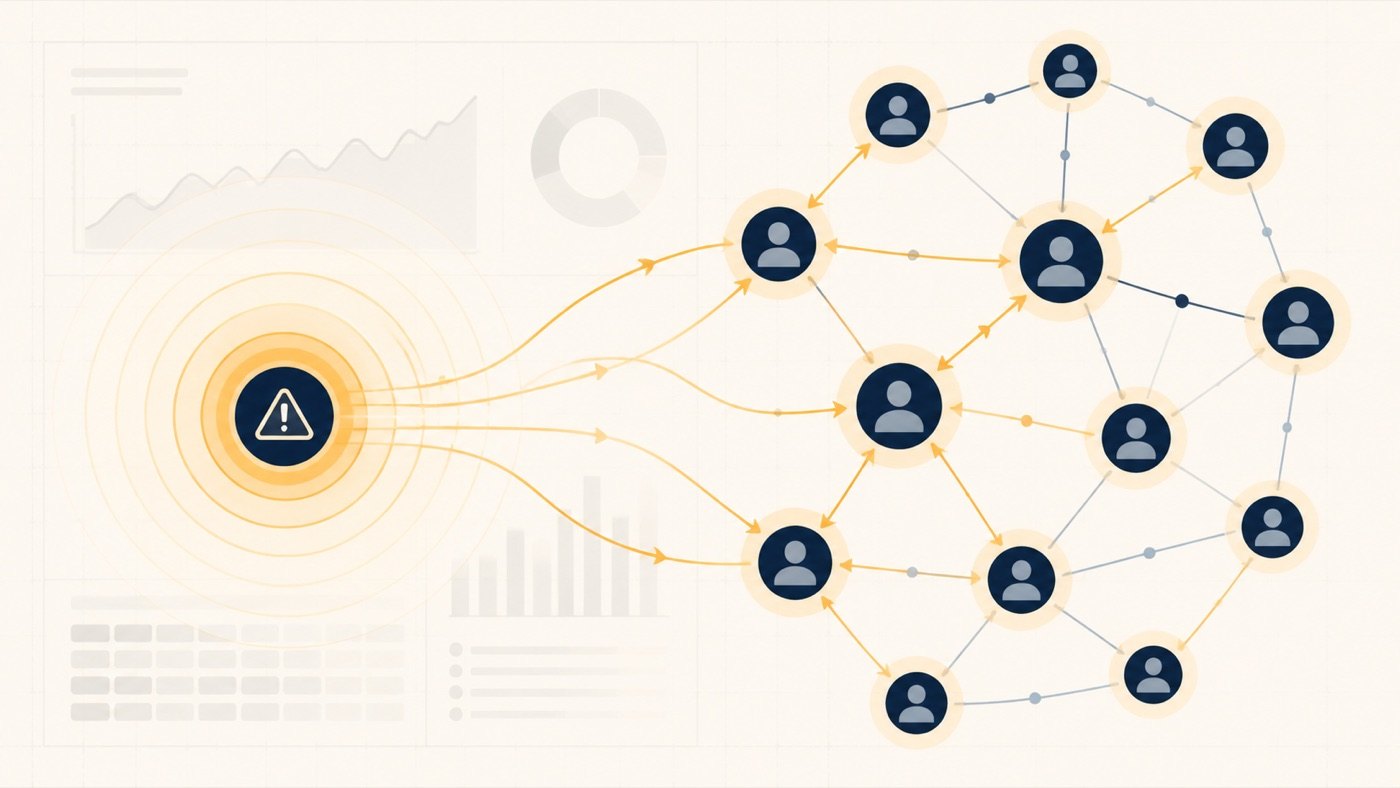
Early warning. Someone notices a rejection pattern, a delivery drop, or a reporting anomaly hours or days before it is widely understood. Knowing that something is systemic rather than specific to your account changes what you do next — you stop debugging your own setup and start waiting it out.
Calibration. Is your cost per result normal for this vertical, this geo, this season? Public benchmarks are averaged into uselessness. A handful of people running comparable campaigns give you a far more accurate reference.
Failure reports. What did not work is more valuable than what did, and almost nobody publishes it. Communities are the only place negative results circulate freely, and negative results are what stop you spending a month rediscovering them.
Escalation paths. Which support channel actually resolves things, who has a working rep relationship, what an appeal needs to contain. Entirely undocumented, entirely learnable from people who have done it.
Note what is not on this list: winning campaign specifics. Nobody hands over a working setup in an open channel, and anyone who claims they will is selling something.
Where communities mislead
Being clear about the failure modes matters as much as the benefits.
Survivorship bias runs deep. The people posting are the ones with something to report. Strategies that quietly failed for most people appear as strategies that worked, because only the winners wrote in.
Confidence is not correlated with accuracy. The most assertive claim in a thread is frequently from the person with the least direct experience. Actual operators tend to hedge — because they know how much of an outcome is account-specific.
Advice does not transfer across account conditions. Account age, spend history, vertical, and trust level change what works. "This worked for me" can be entirely true and entirely inapplicable to you.
Consensus becomes an echo. When a group has been talking for long enough, shared assumptions harden into received wisdom that nobody re-tests. If everyone in the room agrees, that is a reason to check, not a reason to relax.
Four questions to evaluate one
1. What is the ratio of operators to sellers? The most common decay path is a community becoming a lead-generation channel for tools and services. Read a week of discussion before joining: if the answers to operational questions are product recommendations, you have your answer.
2. Do specific questions get specific answers? "Why did my delivery drop after the account restriction lifted" should produce concrete diagnosis with reasoning. If it produces generic advice, the depth is not there.
3. Are negative results welcome? A community where people post what failed is functioning. One where everything reported is a success is either curated for appearances or too small to have failures — neither is useful.
4. Is there a barrier that filters for anything meaningful? Not price for its own sake. Screening for actual spend level, or for vertical, produces different and usually better conversations than screening for willingness to pay.
How to get value out of one
- Ask with context. Vertical, geo, account age, spend level, what you already tried. Questions without context get answers without value.
- Post your failures. It is the highest-value contribution available to you, it costs nothing, and it is what makes people answer you next time.
- Discount confident advice from people you cannot verify. Weight by track record you have observed, not by assertiveness.
- Treat everything as a hypothesis. A community tells you what to test next. It does not tell you what is true for your account.
Frequently asked questions
Are paid communities better?
A fee filters for commitment, which usually helps the operator-to-seller ratio. It also attracts people whose business is selling to members. Judge by the discussion quality, not by the price tag.
How do I evaluate one before paying?
Ask for read access, or find members and ask them directly what they got out of it. Any community confident in its value will let you look first.
Is a large general community or a small vertical one better?
For operational questions, small and vertical usually wins. Forty people running your exact vertical beat forty thousand running everything.
Can a community keep my accounts safe?
No. It can tell you that an enforcement wave is happening and what others are seeing. Your account structure, your compliance posture, and your operating environment are yours to manage.
Where TrafficTalking fits
TrafficTalking is a cross-border operator network that includes media buyers alongside sellers and service providers, organised around first-hand reporting and in-person events rather than published material.
Apply the same four questions to it that you would to any other. A community that cannot survive that examination is not worth your time, regardless of whose it is.
The short version
A media buyer community is an early-warning and calibration system for information that is real, current, and undocumented. It is not a source of working campaigns, and it is not a substitute for testing on your own accounts.
Evaluate by the operator-to-seller ratio, the specificity of answers, whether failures get posted, and whether the barrier filters for something real. Then use it to decide what to test next — never to decide what is true.